

How does your cat identify you?
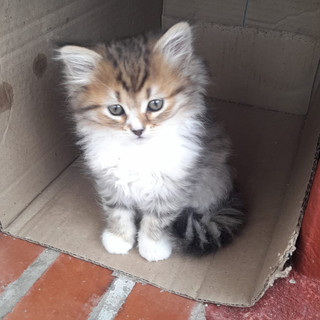
Cats exhibit a unique ability to form special connections with their owners every day. Although they are known for their independence, they consistently display an impressive ability to recognize and differentiate the individuals who care for them through their attentiveness.
Siberian cats, for example, learn to identify you and purr loudly in your presence, showing the trust and emotional connections they've formed with you.
Research by the University of Paris Nanterre in France discovered that cats can tell when their owners are speaking directly to them as opposed to speaking to someone else.
Our Siberian cats know their names, enjoy being groomed, roll onto their backs while purring, and follow you everywhere; they are also the first to engage when guests arrive.
Researchers conducted a study to observe how 16 cats reacted to pre-recorded phrases spoken by their owners and by a stranger. The findings revealed that the cats were more responsive when addressed in a tone similar to that used for children or babies.
How can you tell if a cat knows its owner?
According to the website *Experto Animal*, despite the common perception of cats as independent and distant, the answer is straightforward: cats are indeed capable of distinguishing between people and, as a result, can identify their owners.
This ability arises from the emotional bond cats develop with those who inhabit their environment and are part of their social network. While they might seem less expressive than dogs, anyone who has lived with cats knows they are truly affectionate and appreciate both tranquil moments of rest and interaction with their owners. These animals create close, special connections with their caregivers.
Cats possess the capability to distinctly recognize every person or animal sharing their living space, enabling them to form unique connections with each one.
Their behavior can change based on their relationship with a particular individual; a cat may alter its demeanor depending on who is present at the time.
A cat's senses are essential. Here's how they use them to identify people:
Scent: Cats possess an exceptionally keen sense of smell. They can detect the unique pheromones each person emits, allowing them to recognize individuals by their distinct scent.
Voice and tone: Cats are able to recognize the familiar voices of their owners. They can respond to verbal commands and differentiate between friendly and angry tones.
Body language: Cats are adept at observing human body language. They learn to interpret gestures, postures, and movements to gauge people's moods and intentions.
Routines: Being creatures of habit, cats recognize their owners' daily routines, such as meal times, playtime, and rest periods. They can predict people's actions based on these patterns.
Emotional bonds: Experts suggest that cats form emotional connections with people they interact with regularly. They can detect affection and attention, enabling them to identify their caregivers and respond positively.
Social interaction: Cats are capable of modifying their behavior according to their interactions with various people. They create distinct responses to the emotional and physical signals of each person.
Memory: Cats have long-term memory, which enables them to recall people and past events. They can link particular individuals with either positive or negative experiences.
Eyes and expressions: They recognize people by their eyes and facial expressions; in other words, they may respond to a person's gaze and eye contact.
The website "SoyUnGato," which focuses on all things related to cats, emphasizes the importance of understanding that cats have distinct methods of expressing their emotions and demonstrating their bond with those they deem significant in their lives.
If your cat regards you as their guardian and a reliable presence, you'll probably notice behavioral signs that reflect their fondness for you. Here are some examples:
Direct eye contact and slow blinking: indicates trust and affection.
Purring: expresses comfort and fondness.
Frequent approach: seeks your company and comfort.
Head rubbing: marks territory and reinforces the bond.
Lying on its back: shows a sense of safety and trust.
Following you everywhere: demonstrates interest and attachment.
Gentle licking or nibbling: indicates affection and closeness.
Resting on your lap: shows comfort and bonding.
Playing with you: strengthens the relationship and trust.
Mutual grooming or allowing you to brush it: shares an intimate, friendly behavior.
Keep in mind that each cat is distinct, so some behaviors might differ based on their personality. These behaviors indicate that your cat has a special bond with you and, most importantly, trusts you.

Comments